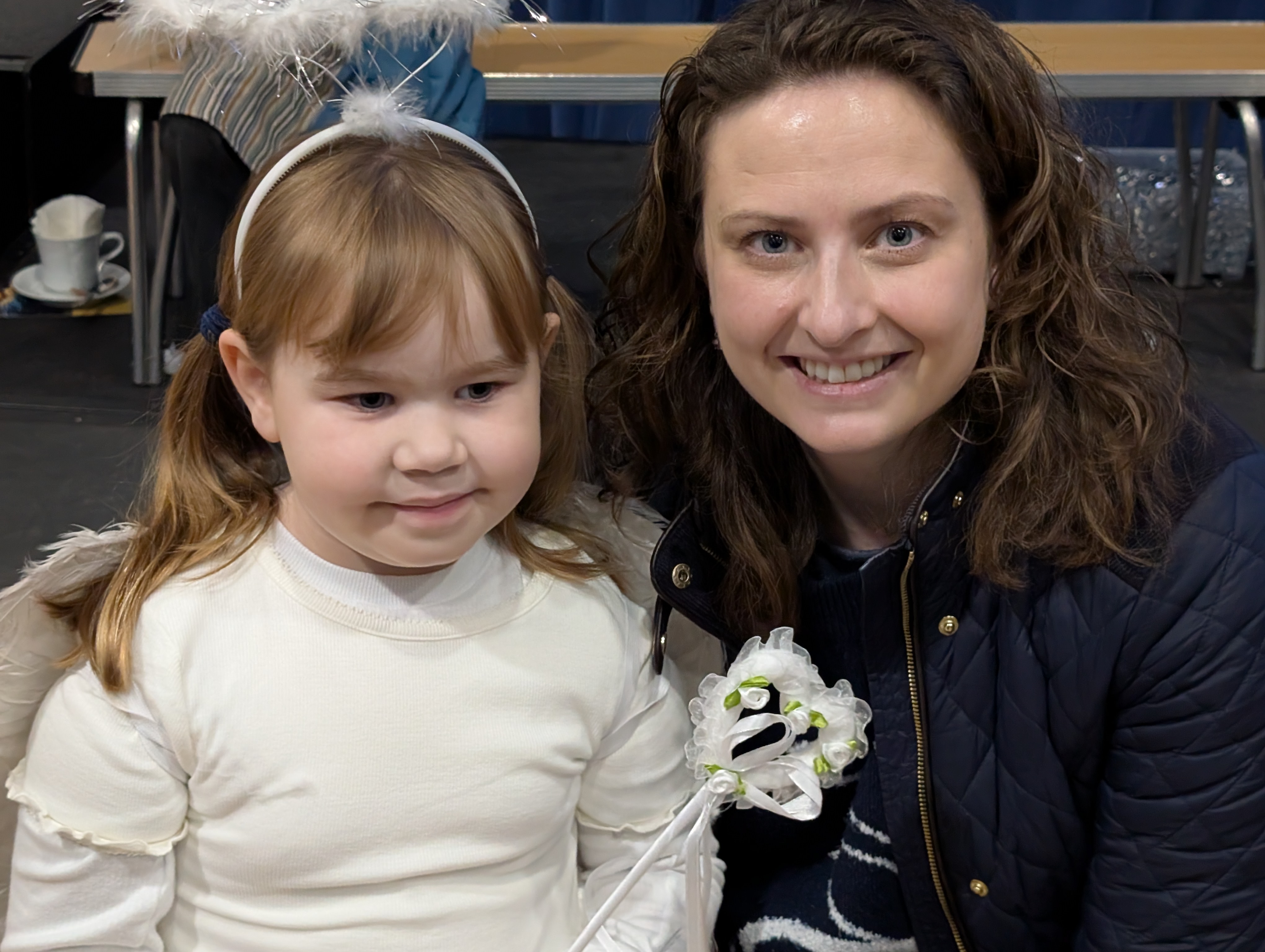
I’m Esther. I have two daughters, both with SEN needs, both completely different from each other, and my younger daughter Phoebe has selective mutism. We only identified it properly when she was 3 and about to start pre-school. Before that I just thought she was painfully shy.
Once we knew what we were dealing with, I knew I needed help but I found that the system was flawed and wasn’t built for urgency. Our first referral was refused because it was done by a setting in one borough, but we lived in another. Then I couldn’t find a private SALT who knew anything about selective mutism.
But I know I am one of the lucky ones. I have a sister who is an Educational Psychologist and pointed me to all the training materials she knew. And I had a SALT friend working on the other side of the country. The more I researched and learned, the more I realised I was the most important person for Phoebe’s recovery, not a professional. And if I had a plan, founded on all these frameworks, and if I knew what to ask for from the school, we could tackle this now. So I read research papers, UK and US treatment frameworks, lived experience accounts, every book I could find. I stayed up until midnight while working full time many times to get through training on anxiety and brain science, the sliding in technique, and research global approaches. I suppose I’ve always been a researcher.
Out of that, I built something: an AI tool trained on everything I’d learned, that I could tell all about Phoebe — her triggers, her context, her own version of SM — and get strategies back that were totally relevant to her. I’ve been using it ever since. It has given me scripts for my child, language to help me advocate with the school, and helped me understand what’s going on in my child’s head. It has also saved me thousands of pounds. My total spend on private SALT: £0.
More importantly my daughter is making great progress 18 months in, and she’s thriving. We’ve gone from no eye contact and zero non-verbal communication at school, to full voice with me in the school building. From too anxious for friends, to playdates and whispered conversations. As I write this in 2026 she has just spoken to a teacher for the first time.
This year I’ve put my corporate career on hold to be the trusted person who walks with her up every rung of the talking ladder, because I believe the neural pathways we’re building now — the ones that say I can speak here, I do speak here — will serve her for the rest of her life.
So while I’ve put other things on hold, I have put this site together to share our journey, bring together some of the hard to find resources on clunky websites, and to share the technology I’ve built that has helped me, in the hope it will benefit other families and make your journey just a little bit easier.
About this site
Situational Mutism is a parent-to-parent resource. Everything here comes from lived experience, backed by research, written in plain language. It is not clinical advice — for that, you need a professional. But it’s the site I wish had existed when we were at the beginning.
The AI tool I built for Phoebe is available to other parents as SM Pocket Coach. If you want strategies specific to your child rather than general information, that’s where to go.
This site provides educational information and personal experience only. It is not a substitute for professional medical or therapeutic advice. Always consult a qualified healthcare professional for clinical concerns.